EN
EN


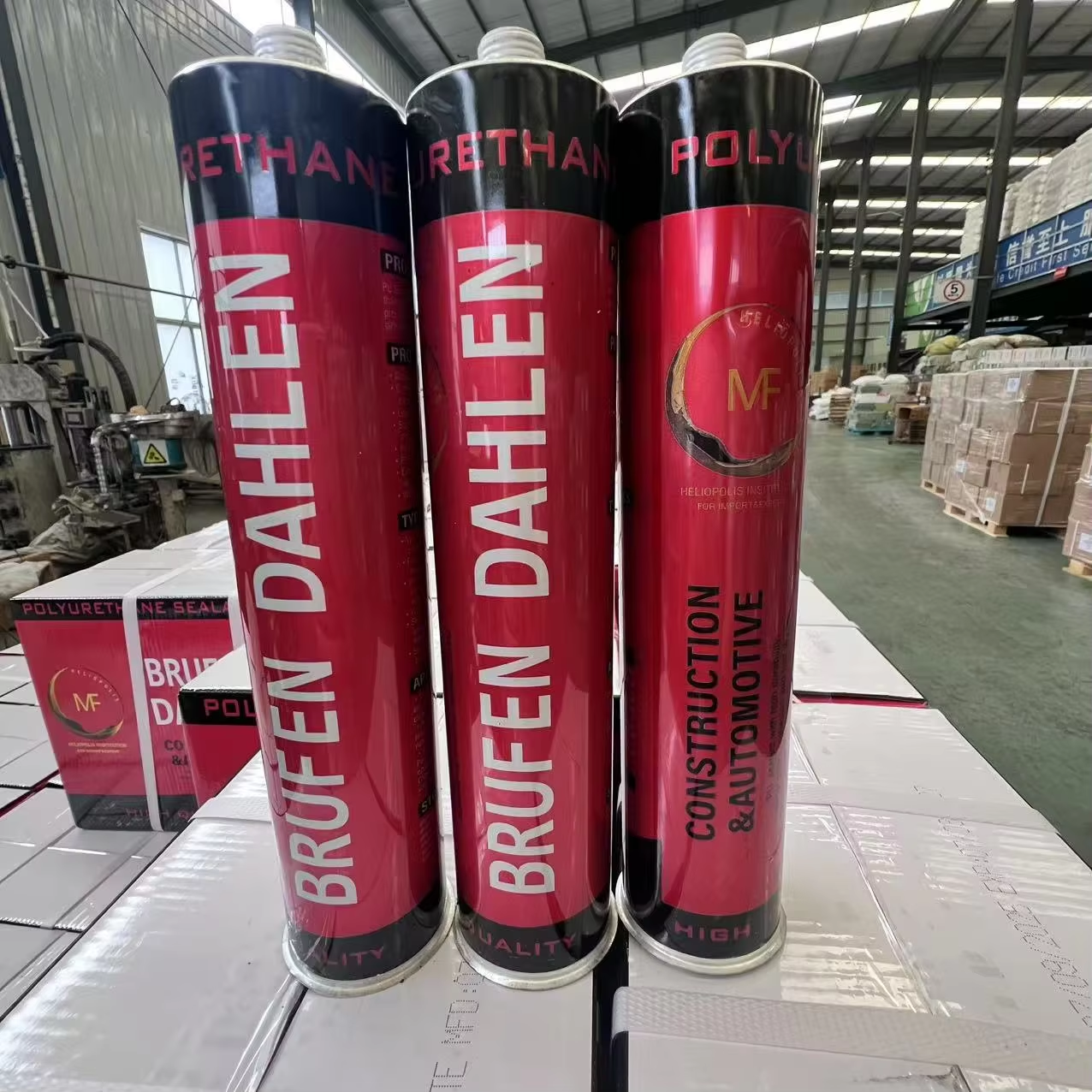
Polyurethane sealants have revolutionized industrial and automotive applications through their exceptional bonding capabilities and weather resistance properties. Before implementing PU sealant solutions in critical projects, professionals must conduct thorough evaluations to ensure optimal performance and long-term durability. Understanding the fundamental characteristics and application requirements of PU sealant systems enables engineers and technicians to make informed decisions that prevent costly failures and ensure project success.
Environmental Compatibility Assessment
Temperature Range Considerations
The operating temperature range represents a critical factor when selecting PU sealant formulations for specific applications. High-quality polyurethane sealants typically maintain their elastomeric properties across temperatures ranging from negative forty to positive eighty degrees Celsius. Engineers must evaluate both ambient installation temperatures and long-term service conditions to ensure the PU sealant maintains its adhesive strength and flexibility throughout its intended lifespan.
Extreme temperature fluctuations can cause thermal expansion and contraction cycles that stress sealant joints beyond their design limits. Professional installation teams should consider seasonal temperature variations and select PU sealant grades specifically formulated to accommodate these environmental challenges while maintaining structural integrity.
Moisture and Humidity Factors
Moisture exposure significantly influences PU sealant cure rates and final mechanical properties during installation and service life. Polyurethane chemistry relies on atmospheric moisture for proper cross-linking, but excessive humidity can accelerate curing too rapidly, potentially compromising bond strength and creating surface defects that reduce long-term performance.
Construction and maintenance professionals must evaluate job site humidity levels and implement appropriate installation procedures to optimize PU sealant performance. Controlled curing environments may be necessary in extreme humidity conditions to achieve manufacturer-specified mechanical properties and ensure reliable adhesion to substrate materials.
Substrate Material Compatibility
Surface Preparation Requirements
Proper substrate preparation forms the foundation of successful PU sealant applications across diverse industrial and automotive projects. Different materials require specific cleaning protocols, primer applications, and surface treatments to achieve optimal adhesion with polyurethane formulations. Metal substrates typically require degreasing and oxide removal, while composite materials may need specialized surface activation treatments.
Quality control procedures should verify substrate cleanliness and surface energy levels before applying PU sealant products. Contaminated surfaces dramatically reduce bond strength and can lead to premature adhesive failure, resulting in expensive repairs and potential safety hazards in critical applications.
Chemical Resistance Properties
The chemical environment surrounding PU sealant installations directly impacts long-term performance and service life expectations. Polyurethane materials exhibit excellent resistance to oils, fuels, and most organic solvents, making them ideal for automotive and industrial applications where chemical exposure is common.
However, strong acids, bases, and certain aggressive chemicals can degrade PU sealant performance over time. Engineering teams must evaluate potential chemical exposures and select appropriate sealant grades with enhanced chemical resistance properties when necessary to maintain structural integrity throughout the intended service life.
Mechanical Performance Evaluation
Load-Bearing Requirements
Structural applications demand comprehensive evaluation of PU sealant mechanical properties including tensile strength, elongation capacity, and fatigue resistance under cyclic loading conditions. High-performance polyurethane formulations can achieve tensile strengths exceeding two megapascals while maintaining elongation values of several hundred percent, enabling them to accommodate significant joint movement without failure.
Design engineers must calculate expected stress levels and movement ranges to select PU sealant products with appropriate mechanical properties. Underestimating load requirements can result in premature sealant failure, while over-specification may increase material costs unnecessarily without providing additional performance benefits.
Dynamic Movement Accommodation
Modern construction and automotive applications subject PU sealant joints to complex dynamic movements including thermal expansion, vibration, and structural deflection. Advanced polyurethane formulations provide excellent elasticity and recovery properties that enable them to accommodate repeated movement cycles without developing permanent set or losing adhesive strength.
Testing protocols should evaluate PU sealant performance under simulated service conditions to verify adequate movement accommodation capabilities. Laboratory testing combined with field performance data helps engineers select optimal sealant grades for applications involving significant dynamic movement requirements.
Application Method Considerations
Installation Equipment Compatibility
Professional PU sealant application requires appropriate dispensing equipment capable of maintaining consistent bead profiles and ensuring complete substrate wetting. Pneumatic dispensing systems provide precise flow control for high-volume applications, while manual dispensing tools offer flexibility for smaller projects and repair operations.
Equipment selection must consider PU sealant viscosity, pot life, and working time requirements to ensure successful installation outcomes. Incompatible dispensing equipment can cause application difficulties, inconsistent bead geometry, and poor surface wetting that compromises adhesive performance and creates potential failure points.
Curing Time Management
Polyurethane sealant curing characteristics directly impact project scheduling and quality control procedures during installation operations. Most PU sealant formulations achieve initial skin formation within fifteen to thirty minutes under standard conditions, with full mechanical properties developing over several hours or days depending on environmental factors and sealant thickness.
Project managers must coordinate PU sealant application timing with subsequent construction activities to prevent damage to uncured materials while maintaining efficient workflow schedules. Accelerated curing systems may be necessary for applications requiring rapid return to service or when environmental conditions limit normal curing processes.
Quality Assurance Protocols
Performance Testing Standards
Comprehensive quality assurance programs incorporate standardized testing protocols to verify PU sealant performance meets project specifications and regulatory requirements. Industry standards such as ASTM and ISO provide established test methods for evaluating adhesive strength, durability, and environmental resistance properties of polyurethane sealant systems.
Regular quality control testing during material receipt and application phases helps identify potential issues before they impact project outcomes. Documentation of test results provides valuable performance data for future projects and supports warranty claims if performance issues develop during service life.
Long-Term Monitoring Requirements
Successful PU sealant applications require ongoing monitoring to track performance trends and identify maintenance requirements before failures occur. Visual inspection protocols should evaluate joint appearance, adhesion integrity, and signs of environmental degradation that could indicate developing problems requiring corrective action.
Predictive maintenance programs incorporating regular PU sealant condition assessments help optimize replacement timing and prevent unexpected failures that could compromise system performance or safety. Historical performance data supports improved sealant selection for future projects and validates design assumptions used in initial evaluations.
Cost-Benefit Analysis Framework
Initial Investment Considerations
Economic evaluation of PU sealant applications must consider both initial material costs and long-term performance benefits to determine overall project value. Premium polyurethane formulations typically command higher prices than alternative sealants but often provide superior durability and reduced maintenance requirements that offset initial cost differences over their service life.
Lifecycle cost analysis should incorporate material costs, installation labor, equipment requirements, and projected maintenance expenses to provide accurate economic comparisons between different PU sealant options. This comprehensive approach helps project teams make informed decisions that optimize both performance and economic outcomes.
Performance Value Assessment
The superior performance characteristics of high-quality PU sealant products often justify premium pricing through reduced maintenance requirements, extended service life, and improved reliability compared to alternative sealing solutions. Quantifying these performance benefits requires careful analysis of historical maintenance data and failure costs associated with different sealant types.
Risk assessment methodologies should evaluate potential consequences of sealant failure including repair costs, system downtime, and safety implications to establish appropriate performance requirements. This analysis helps justify PU sealant selection decisions and supports budget allocation for critical sealing applications.
FAQ
How do I determine the appropriate PU sealant grade for my specific application
Selecting the appropriate PU sealant grade requires careful evaluation of environmental conditions, substrate materials, mechanical requirements, and performance expectations for your specific application. Consult with sealant manufacturers or technical specialists who can recommend suitable formulations based on your project requirements and provide application guidance to ensure optimal results.
What surface preparation is required before applying PU sealant
Proper surface preparation for PU sealant applications includes thorough cleaning to remove dirt, oil, moisture, and loose materials that could interfere with adhesion. Most substrates require degreasing with appropriate solvents, followed by primer application if specified by the manufacturer. Surface roughening may be necessary for smooth materials to improve mechanical adhesion between the sealant and substrate.
How long does PU sealant take to cure completely
PU sealant curing time varies depending on environmental conditions, sealant thickness, and specific formulation characteristics. Initial skin formation typically occurs within thirty minutes under standard conditions, while full mechanical properties develop over twenty-four to seventy-two hours. Higher humidity accelerates curing, while low temperatures and thick applications extend cure times significantly.
Can PU sealant be applied in cold weather conditions
Most PU sealant formulations can be applied in cold weather conditions down to approximately five degrees Celsius, though application becomes more challenging and cure times extend significantly. Special cold-weather formulations are available for applications below normal temperature ranges, and heating equipment may be necessary to maintain proper application viscosity and ensure adequate substrate wetting in extreme conditions.