EN
EN



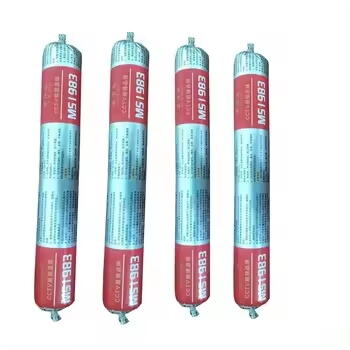
Choosing the right MS sealant grade is one of the most consequential decisions a product engineer, construction professional, or procurement specialist can make. Modified silane technology has evolved considerably over the past two decades, and today the market offers a wide spectrum of grades, each engineered to meet different mechanical, chemical, and environmental demands. A mismatch between sealant grade and application requirements does not just reduce performance — it can lead to joint failure, substrate damage, costly rework, and liability exposure. Understanding the selection logic is therefore not optional; it is a foundational engineering competency.
The term MS sealant refers to a moisture-curing polymer system built on modified silane end groups, combining the flexibility of polyurethane with the weathering durability of silicone. Because this chemistry is inherently versatile, manufacturers formulate it into multiple grades — structural, elastic, low-modulus, high-modulus, paintable, and more — each targeting a distinct performance window. This article walks through the systematic selection process, helping you match grade characteristics to your specific substrate, movement requirement, environmental exposure, and functional objective.
Understanding the Grade Spectrum of MS Sealant
What Makes Grades Different Within the Same Chemistry
All MS sealant products share the same fundamental curing mechanism — moisture-triggered crosslinking of silane-terminated polymer chains — but the formulation variables that determine grade identity are numerous and significant. The molecular weight of the base polymer, the density of silane end groups, the type and concentration of plasticizers, the choice of fillers, and the inclusion of adhesion promoters all shift the final product into a different performance category. Understanding these variables is the first step toward intelligent selection.
Grade differentiation is typically expressed through three primary performance axes: modulus, elongation at break, and Shore A hardness. A high-modulus MS sealant builds strong, rigid bonds ideal for structural glazing and load-bearing joints, while a low-modulus grade remains soft and elastic throughout its service life, accommodating wide joint movement without transferring stress to the substrate. Medium-modulus grades occupy a balanced middle ground, making them suitable for general construction sealing and façade work where both adhesion and flexibility matter.
Beyond mechanical metrics, grade selection also involves chemical compatibility, surface sensitivity, and cure speed profiles. A MS sealant grade formulated for porous substrates like concrete or natural stone will carry different primer and adhesion promoter packages than one designed for smooth aluminum or coated steel. Recognizing that grade is a multi-dimensional classification, not just a hardness number, helps avoid oversimplified selection decisions.
Structural Versus Elastic Grade Distinctions
The most fundamental grade distinction in MS sealant selection is between structural and elastic formulations. Structural grades are engineered to provide load-bearing adhesion — they resist shear forces, peel forces, and tensile loads without significant creep. These grades are indispensable in curtain wall systems, composite panel bonding, and transportation vehicle body assembly where mechanical integrity is the primary requirement.
Elastic grades, by contrast, prioritize movement accommodation over load resistance. They are designed for expansion joints, perimeter sealing, and any application where substrates experience differential thermal movement, vibration, or dynamic loading. An elastic MS sealant can typically sustain elongation values of 400% or more, and its low tensile modulus ensures that large substrate movements do not generate destructive stress concentrations at bond lines.
Selecting structural grade for an application that genuinely requires elasticity is a common and serious mistake. When a rigid bond is placed across an expansion joint, the sealant will eventually crack, delaminate, or pull the substrate coating away as the joint cycles. Conversely, using an elastic grade in a structural glazing application introduces unacceptable creep under sustained load. The application's primary mechanical demand must drive grade selection before any other criteria are considered.
Matching MS Sealant Grade to Substrate Type
Metal and Glass Substrates
Metal substrates — aluminum, stainless steel, galvanized steel, and powder-coated profiles — are among the most common surfaces for MS sealant applications in architectural and industrial environments. These surfaces are non-porous, chemically inert, and often coated, which means adhesion depends almost entirely on surface preparation and the primer package built into or applied alongside the sealant grade. For anodized aluminum and painted profiles, grades formulated with specific silane adhesion promoters provide direct bonding without a separate primer, while grades without these promoters require a dedicated primer step.
Glass bonding and glazing applications demand additional consideration of UV stability and optical clarity requirements. Some MS sealant grades are specifically formulated to resist yellowing and surface chalking under prolonged UV exposure, which is essential when the joint line is visible or when the sealant is exposed to direct sunlight. For structural glazing, select a grade that has been independently tested to recognized adhesive bonding standards for glazing systems, ensuring long-term cohesive strength is not compromised by UV degradation.
Porous and Cementitious Substrates
Concrete, masonry, fiber cement board, and natural stone present a very different challenge for MS sealant selection. These substrates are porous, alkaline, and often variably absorbent, which affects both adhesion development and long-term bond durability. Grades intended for cementitious substrates typically incorporate alkaline-resistant adhesion promoters and may require priming, particularly when joints are wide, heavily loaded, or exposed to wet conditions.
The movement capacity of cementitious substrate joints also tends to be higher than metalwork joints due to thermal cycling, moisture-driven dimensional changes, and structural settlement. This means the preferred MS sealant grade for masonry sealing typically falls in the low-to-medium modulus range, offering enough elongation to follow joint movement without substrate cohesive failure. Joint design — depth-to-width ratio and backing rod selection — interacts critically with the grade's elongation capacity and must be evaluated together.
For natural stone, bleeding and staining sensitivity is an additional grade selection parameter. Certain plasticizers used in MS sealant formulations can migrate into porous stone and cause permanent discoloration. Stain-safe or low-migration grades are specifically formulated to address this issue, and their use on marble, granite, limestone, and similar substrates is strongly recommended regardless of the mechanical performance requirements.
Environmental Exposure and Long-Term Durability Considerations
Temperature Range and Thermal Cycling Performance
The operating temperature range of the application environment is a decisive grade selection factor. MS sealant grades differ significantly in their low-temperature flexibility and high-temperature stability. Grades intended for cold-climate exterior applications are formulated to remain elastic and tack-free at temperatures well below freezing, whereas standard grades may stiffen unacceptably in arctic conditions, reducing their ability to accommodate joint movement during winter thermal contraction.
At the high-temperature end, industrial and transportation applications — vehicle underbody sealing, industrial equipment sealing, and HVAC duct work — may expose the MS sealant to sustained heat that exceeds 80°C. Not all grades are qualified for these thermal environments, and selecting a grade without verified heat aging test data for the intended temperature exposure is a significant technical risk. Always request heat aging data, typically expressed as retention of tensile strength and elongation after accelerated thermal aging cycles, before finalizing grade selection for high-temperature environments.
Moisture, Chemical, and UV Resistance
Exterior applications expose MS sealant to the combined weathering effects of UV radiation, precipitation, and freeze-thaw cycling. The modified silane backbone provides inherent weather resistance superior to polyurethane, but formulation quality and stabilizer packages still vary between grades. For façade and roofing applications, select grades that have documented QUV accelerated weathering test results, demonstrating minimal elongation loss and color stability after thousands of hours of exposure.
Chemical resistance is equally important in industrial sealing contexts. A MS sealant used to seal process equipment, chemical storage tanks, or laboratory surfaces may contact acids, bases, solvents, or cleaning agents. Most standard MS sealant grades are not designed for prolonged solvent immersion, and grades with enhanced chemical resistance formulations must be selected and verified against the specific chemical exposure profile. Chemical resistance data sheets, not generic product brochures, should be the reference document for these decisions.
Marine and coastal environments introduce chloride exposure, biofouling risk, and constant moisture immersion as compounding factors. In these conditions, a MS sealant grade with proven hydrolytic stability, tested through extended water immersion adhesion tests, is the appropriate choice. Some grades also incorporate biocide packages to resist mold and algae growth, which is particularly relevant for below-waterline or humid interior applications where biological contamination is a recurring issue.
Application Method and Processing Requirements
Viscosity, Workability, and Open Time
Grade selection must also account for the practical realities of application and processing. MS sealant grades vary considerably in viscosity, which directly affects dispensing method, toolability, and suitability for automated versus manual application. Low-viscosity grades flow easily and self-level, making them appropriate for horizontal joints and potting applications, while high-viscosity non-sag grades are engineered for vertical and overhead joint sealing where slumping would compromise joint geometry.
Open time — the period during which the MS sealant remains workable after application — is another grade-specific parameter that must match production workflow. In high-volume manufacturing environments using robotic dispensing, fast-curing grades with short open times improve throughput. In complex manual sealing operations where tooling and finishing take time, a grade with extended open time reduces the risk of surface skinning before the joint is properly formed. Cure speed and open time must be verified under the actual temperature and humidity conditions of the application environment, not just standard laboratory conditions.
Primer Requirements and Surface Preparation Compatibility
Some MS sealant grades are formulated as primer-less systems capable of direct adhesion to a wide range of substrates with only proper surface cleaning. Others require specific primer applications to develop adequate adhesion, particularly on difficult substrates like EPDM rubber, certain plastics, or heavily oxidized metal surfaces. The primer requirement is not a deficiency — it is a formulation choice that allows the base sealant chemistry to be optimized for maximum mechanical performance while offloading adhesion activation to a dedicated primer system.
Before finalizing grade selection, conduct an adhesion test program using your actual substrate materials, surface preparation methods, and ambient conditions. A MS sealant grade that performs excellently on clean laboratory panels may behave differently on production-line substrates with contamination from release agents, cutting fluids, or atmospheric deposition. The adhesion test should include peel, lap shear, and where relevant, extended water soak testing to simulate real service conditions with confidence. Relying exclusively on datasheet values without substrate-specific verification is a common cause of field failures that could have been prevented at the selection stage.
Functional Application Categories and Grade Fit
Construction, Façade, and Fenestration Applications
In construction applications, the MS sealant grade must balance adhesion to mixed substrate types — aluminum frames, glass panels, concrete reveals, and EPDM gaskets — while maintaining long-term elasticity across temperature extremes. Façade sealants typically call for a medium-modulus, high-elongation grade with strong UV stability and paintability, since joint lines in architectural work are often overcoated with matching paint finishes. Fenestration sealing at window perimeters requires a grade that also delivers acoustic damping and airtightness in addition to weatherproofing.
For structural glazing where glass panels are bonded directly to the supporting frame without mechanical retention, a high-modulus structural MS sealant grade with verified structural performance data is mandatory. These grades must pass rigorous shear strength, peel resistance, and long-term creep tests under sustained load. The grade selection process for structural glazing should involve formal engineering calculation of bond line dimensions, and the sealant supplier should provide technical support for these calculations rather than leaving them entirely to the installer.
Industrial, Automotive, and Marine Applications
In industrial and automotive manufacturing, MS sealant grades are used for body sealing, hem flange bonding, underbody corrosion protection sealing, and component assembly. These applications demand fast cure rates compatible with production line speeds, resistance to e-coat overspray and painting processes, and long-term durability under vibration, thermal cycling, and chemical exposure from road fluids. Grades designed for automotive use are often specifically qualified against OEM material specifications, and selection should reference those qualification standards rather than generic industrial sealant criteria.
Marine applications present perhaps the most demanding combination of requirements for any MS sealant grade — constant UV exposure, full water immersion, dynamic hull flexing, and biofouling pressure all acting simultaneously. Grades for above-waterline marine use must be UV-stable and elastically flexible, while below-waterline grades require hydrolytic resistance and compatibility with antifouling coating systems. The distinction between these two marine use zones is critical, and applying an above-waterline grade in a below-waterline position is a selection error that leads to early sealant degradation and joint failure.
FAQ
What is the difference between high-modulus and low-modulus MS sealant grades?
High-modulus MS sealant grades cure to a stiffer, stronger bond with higher tensile strength, making them suitable for structural applications where load transfer between bonded components is required. Low-modulus grades remain soft and highly elastic after curing, prioritizing movement accommodation over load resistance. The correct choice depends entirely on whether the application demands structural load sharing or flexible joint sealing across moving substrates.
Can MS sealant be used without a primer on all substrates?
Not all MS sealant grades are suitable for primerless application on every substrate. Some grades contain built-in adhesion promoters that enable direct bonding to common construction substrates like aluminum, glass, and concrete after proper surface cleaning. However, difficult substrates such as certain plastics, rubbers, and heavily oxidized metals typically require a dedicated primer to achieve reliable adhesion. Always perform substrate-specific adhesion testing before committing to a primerless application approach in production.
How does temperature affect MS sealant grade selection?
Temperature affects both the curing process and the long-term service performance of MS sealant. At low application temperatures, cure rates slow significantly, and some grades may not achieve adequate early strength. At high service temperatures, certain grades can experience accelerated creep or softening. For applications in extreme cold or heat, verify that the selected grade has been tested and rated for those specific temperature ranges through heat aging and low-temperature flexibility tests, using actual test data rather than general chemistry assumptions.
Is MS sealant suitable for food-contact or sanitary applications?
Standard industrial MS sealant grades are typically not certified for direct food-contact applications. For food processing environments, pharmaceutical facilities, or medical equipment, food-grade or sanitary-grade sealant formulations with appropriate regulatory certifications are required. These specialized grades are subject to strict restrictions on plasticizer type, pigment, and biocide content to ensure safety and compliance. Always request relevant food safety or health authority certification documentation when selecting a sealant for these sensitive application environments.