EN
EN



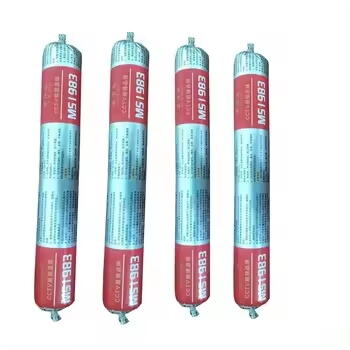
The bonding strength of structural silicone sealant represents one of the most critical performance characteristics that determines its effectiveness in demanding construction and industrial applications. Understanding the multiple factors that influence this bonding capability is essential for engineers, contractors, and manufacturers who rely on these advanced adhesive materials to create durable, weatherproof connections between building components, curtain wall systems, and structural glazing assemblies.
The bonding strength of structural silicone sealant is influenced by a complex interplay of material properties, environmental conditions, surface preparation techniques, and application methods. These factors work together to determine whether a sealant joint will maintain its structural integrity over decades of service life or experience premature failure that compromises building safety and performance. Professional understanding of these influencing factors enables optimal selection, application, and long-term performance of structural adhesive systems in critical load-bearing applications.
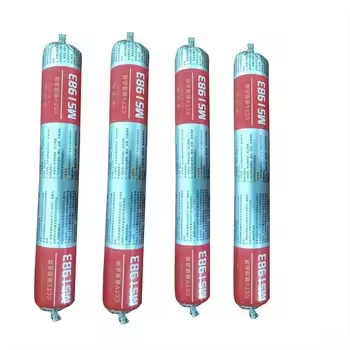
Chemical Composition and Formulation Factors
Polymer Backbone Structure
The fundamental polymer chemistry of structural silicone sealant directly impacts its bonding strength through molecular-level interactions with substrate surfaces. Silicone polymers with optimized chain length and cross-linking density provide superior adhesion characteristics compared to standard formulations. The siloxane backbone structure inherently offers flexibility while maintaining strong intermolecular forces that contribute to excellent substrate wetting and penetration into surface irregularities.
Advanced polymer formulations incorporate specific functional groups that enhance chemical bonding with common construction materials including aluminum, glass, steel, and composite panels. These reactive sites create stronger primary bonds rather than relying solely on mechanical adhesion, resulting in measurably higher bond strength values under both static and dynamic loading conditions.
Adhesion Promoter Systems
Proprietary adhesion promoter additives within high-performance structural silicone sealant formulations significantly enhance bonding strength by improving chemical compatibility between the sealant matrix and substrate surfaces. These molecular coupling agents create bridge connections that increase the effective bonding area and reduce stress concentrations at the interface.
Silane coupling agents represent the most common adhesion promoter technology, forming covalent bonds with both the silicone polymer and substrate surface oxide layers. The concentration and selection of these promoters must be carefully balanced to optimize bonding performance without compromising other essential properties like flexibility or durability. Professional-grade formulations often incorporate multiple adhesion promoter systems to ensure reliable bonding across diverse substrate combinations.
Filler and Reinforcement Systems
The type, particle size, and concentration of reinforcing fillers directly influence the mechanical properties and bonding strength of structural silicone sealant. Precipitated silica fillers provide rheological control while enhancing tensile strength and tear resistance. Properly treated fillers create strong interfacial bonds with the polymer matrix, enabling effective stress transfer throughout the cured sealant joint.
Advanced filler systems may include surface-modified calcium carbonate, treated aluminum oxide, or specialized nanoparticles that improve bonding performance while maintaining workability during application. The filler loading level must be optimized to maximize bonding strength without creating excessive stiffness that could lead to stress concentrations or reduced substrate conformability.
Surface Preparation and Substrate Factors
Surface Cleanliness and Contamination Control
Proper surface preparation represents one of the most critical factors affecting the bonding strength of structural silicone sealant applications. Even microscopic levels of contamination from oils, release agents, fingerprints, or atmospheric pollutants can dramatically reduce bond strength by creating weak boundary layers that prevent intimate contact between the sealant and substrate surface.
Effective cleaning protocols typically involve solvent wiping with appropriate cleaning agents followed by thorough drying before sealant application. The selection of cleaning solvents must consider substrate compatibility and complete evaporation to avoid residue that could interfere with bonding. Professional applications often require multiple cleaning stages with different solvents to address various types of contamination that may be present on construction materials.
Surface Roughness and Texture
The microscopic surface texture of substrates significantly influences the bonding strength of structural silicone sealant by affecting the contact area and mechanical interlocking between the cured sealant and substrate surface. Controlled surface roughness increases the effective bonding area and provides mechanical anchoring points that enhance overall joint strength.
However, excessive roughness can create air entrapment and stress concentration points that reduce bonding effectiveness. Optimal surface preparation may involve light abrasion techniques to remove weak surface layers and create controlled texture without generating debris or microscopic cracks. The ideal surface condition balances increased contact area with uniform stress distribution across the bond line.
Substrate Material Properties
Different substrate materials exhibit varying degrees of compatibility with structural silicone sealant systems, directly affecting achievable bonding strength. Non-porous materials like glass and aluminum typically provide excellent bonding surfaces when properly prepared, while porous substrates may require primer application to seal the surface and create a uniform bonding interface.
The thermal expansion characteristics of substrate materials also influence long-term bonding performance, as differential movement between dissimilar materials can create cyclic stress that gradually weakens the adhesive bond. Understanding substrate-specific bonding requirements enables selection of appropriate sealant formulations and application techniques that maximize initial bond strength and long-term durability.
Application and Curing Process Factors
Environmental Conditions During Application
Temperature and humidity conditions during structural silicone sealant application significantly impact the curing process and final bonding strength. Most structural sealants are designed for application within specific temperature ranges that optimize flow properties and ensure proper cure initiation. Extreme temperatures can cause premature skin formation, incomplete substrate wetting, or delayed cure that affects bond development.
Relative humidity levels influence the curing rate of moisture-cure silicone systems, with very low humidity potentially causing incomplete cure and very high humidity leading to rapid skin formation that traps uncured material. Professional applications often require environmental monitoring and control to maintain optimal conditions throughout the application and initial cure period.
Application Thickness and Joint Geometry
The thickness and geometric configuration of structural silicone sealant joints directly affect bonding strength through their influence on stress distribution and cure uniformity. Thin bond lines typically provide higher strength per unit area due to reduced stress concentrations and more uniform cure throughout the joint thickness. However, very thin applications may not accommodate substrate irregularities or provide adequate sealant volume for long-term performance.
Joint width and depth ratios must be carefully designed to ensure complete cure while providing appropriate stress distribution under anticipated loading conditions. Wide, shallow joints may experience incomplete cure in the center regions, while narrow, deep joints can create stress concentrations that reduce effective bonding strength. Professional joint design considers both immediate bonding requirements and long-term performance expectations.
Cure Time and Temperature Exposure
The curing profile of structural silicone sealant significantly influences final bonding strength through its effect on molecular cross-linking density and interfacial bond formation. Adequate cure time allows complete chemical reactions that develop maximum adhesive strength, while premature loading can disrupt bond formation and permanently reduce joint performance.
Elevated temperatures during cure can accelerate the cross-linking process but may also cause internal stresses if temperature gradients exist across thick sections. Controlled curing conditions that allow gradual, uniform cure development typically produce optimal bonding strength. Post-cure conditioning at elevated temperature may be beneficial for some structural silicone sealant formulations to complete secondary reactions that enhance long-term performance.
Mechanical and Environmental Stress Factors
Load Distribution and Stress Concentration
The manner in which mechanical loads are transmitted through structural silicone sealant joints directly affects the apparent bonding strength and long-term joint performance. Uniform stress distribution across the entire bonded area maximizes the effective utilization of sealant bonding capacity, while stress concentrations can cause localized failures that propagate throughout the joint.
Joint design features such as edge details, thickness transitions, and substrate stiffness differences influence stress distribution patterns. Professional structural design considers these factors to minimize peak stresses and ensure that applied loads remain within the bonding capacity of the structural silicone sealant system throughout the anticipated service life.
Thermal Cycling and Environmental Exposure
Repeated thermal cycling creates differential expansion stresses that can gradually degrade the bonding strength of structural silicone sealant joints over time. The magnitude of thermal stress depends on the coefficient of thermal expansion differences between the sealant and substrate materials, the joint geometry, and the temperature range experienced during service.
Environmental factors such as ultraviolet radiation exposure, moisture cycling, and chemical contamination can also affect long-term bonding performance by causing gradual degradation of the polymer matrix or interfacial bonds. High-performance structural silicone sealant formulations incorporate stabilizers and protective additives to minimize environmental effects, but proper joint design remains essential for maintaining bonding strength under severe exposure conditions.
Dynamic Loading and Fatigue Considerations
Dynamic loading from wind, seismic activity, or building movement creates cyclic stresses that can cause fatigue degradation of structural silicone sealant bonds over extended service periods. The fatigue resistance of sealant joints depends on the bonding strength, joint flexibility, and the magnitude and frequency of applied stress cycles.
Proper joint design for dynamic applications requires consideration of both peak load capacity and fatigue life expectations. Structural silicone sealant systems with enhanced bonding strength typically provide improved fatigue performance, but joint geometry and load distribution remain critical factors for achieving reliable long-term performance under cyclic loading conditions.
FAQ
How does surface primer application affect structural silicone sealant bonding strength?
Surface primer application can significantly enhance bonding strength by creating a chemically compatible interface layer that improves adhesion between the structural silicone sealant and substrate surface. Primers are particularly beneficial for difficult-to-bond substrates like certain plastics, treated metals, or porous materials. The primer forms molecular bridges that increase the effective bonding area and provide more uniform stress distribution across the interface.
What is the typical range of bonding strength values for high-performance structural silicone sealant?
High-performance structural silicone sealant systems typically achieve bonding strength values ranging from 0.3 to 1.0 MPa (45 to 145 psi) depending on the substrate material, surface preparation quality, and test conditions. Glass and aluminum substrates generally provide the highest bonding strength values, while porous or contaminated surfaces may result in lower performance. These values represent initial bonding strength under standard laboratory conditions and may vary in actual service applications.
Can structural silicone sealant bonding strength be improved after initial application?
The bonding strength of structural silicone sealant is primarily established during the initial curing process and cannot be significantly improved after full cure is achieved. However, some formulations may continue to develop additional strength over extended periods through secondary curing reactions. Post-cure heating may accelerate these reactions in some cases, but the primary opportunity for optimizing bonding strength occurs during proper surface preparation, application, and initial curing phases.
How do you test and verify the bonding strength of structural silicone sealant in field applications?
Field testing of structural silicone sealant bonding strength typically involves adhesion pull-off tests using calibrated equipment to measure the force required to cause bond failure. Test samples should be prepared using identical materials, surface preparation, and application procedures as the actual installation. Regular quality assurance testing during construction helps verify that proper bonding strength is being achieved and maintained throughout the project installation process.
Table of Contents
- Chemical Composition and Formulation Factors
- Surface Preparation and Substrate Factors
- Application and Curing Process Factors
- Mechanical and Environmental Stress Factors
-
FAQ
- How does surface primer application affect structural silicone sealant bonding strength?
- What is the typical range of bonding strength values for high-performance structural silicone sealant?
- Can structural silicone sealant bonding strength be improved after initial application?
- How do you test and verify the bonding strength of structural silicone sealant in field applications?