EN
EN


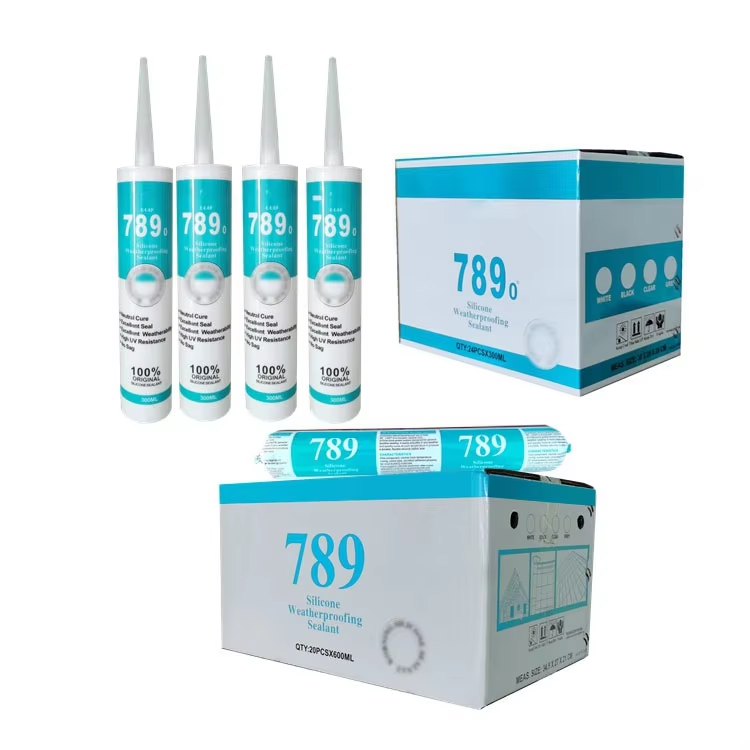
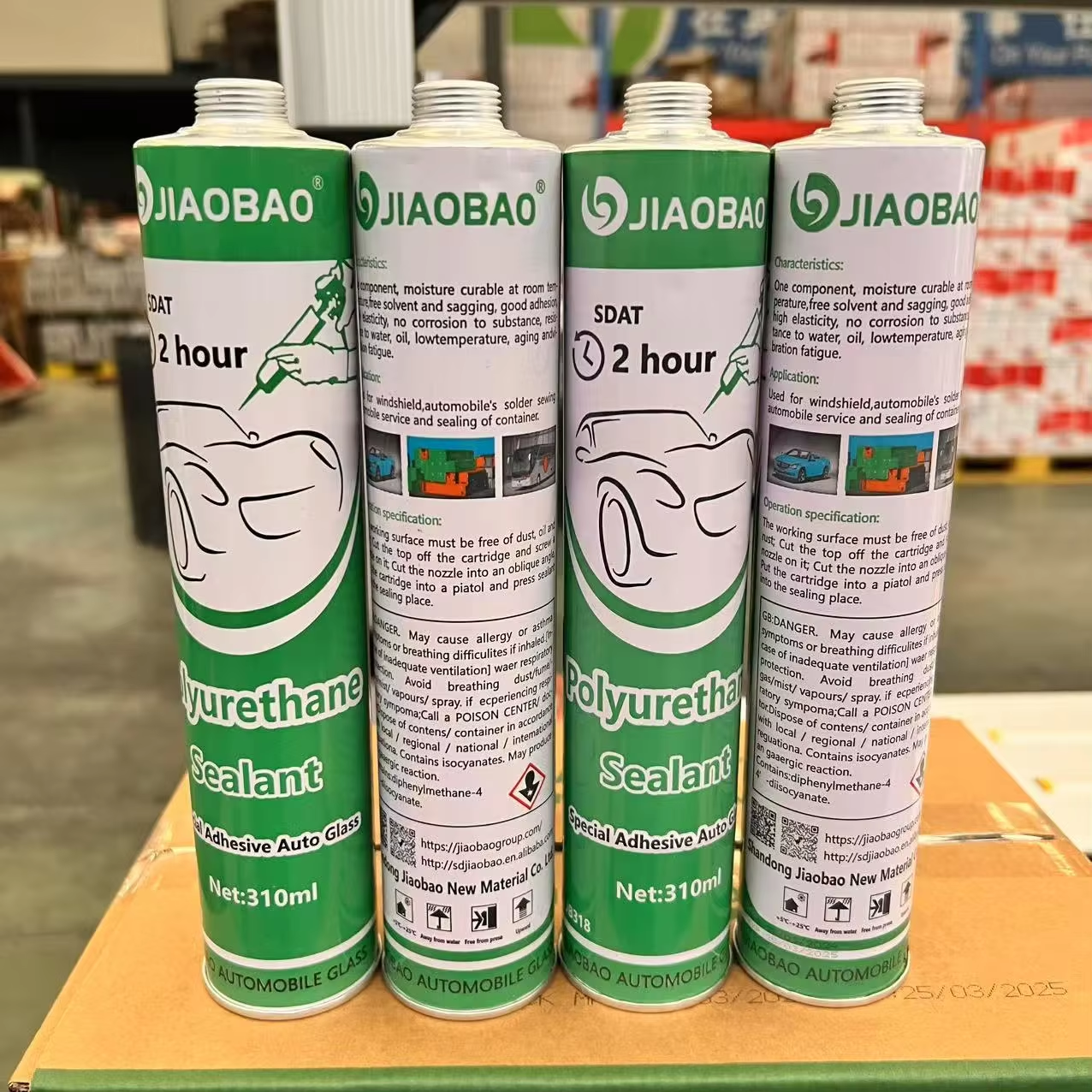
PU silicone sealant represents a breakthrough in industrial sealing technology by combining the best characteristics of polyurethane and silicone polymers. This hybrid formulation addresses the limitations that traditional single-component sealants face in demanding industrial environments, offering superior adhesion, flexibility, and chemical resistance. The unique molecular structure of PU silicone sealant creates a balanced performance profile that meets the diverse challenges of modern manufacturing, construction, and automotive industries where conventional sealants often fall short.
The industrial appeal of PU silicone sealant stems from its ability to maintain performance consistency across extreme temperature variations, chemical exposures, and mechanical stress conditions. Unlike pure polyurethane sealants that can become brittle under UV exposure or pure silicone sealants that may lack sufficient structural strength, this hybrid solution delivers reliable long-term performance in applications ranging from heavy machinery assembly to precision electronic component sealing. Understanding what makes this material ideal for industrial use requires examining its unique chemical composition, performance characteristics, and practical advantages over alternative sealing solutions.
Chemical Composition and Hybrid Technology
Polyurethane and Silicone Polymer Integration
The foundation of PU silicone sealant effectiveness lies in its sophisticated polymer chain structure that incorporates both urethane linkages and siloxane bonds. This molecular architecture allows the material to exhibit the elastic recovery properties characteristic of silicone while maintaining the superior adhesion and mechanical strength associated with polyurethane. The hybrid polymer network creates cross-linking patterns that resist degradation under thermal cycling, chemical exposure, and mechanical stress, making PU silicone sealant particularly valuable for industrial applications requiring long-term reliability.
The curing mechanism of PU silicone sealant involves moisture-activated polymerization that forms a three-dimensional network combining urethane and siloxane segments. This dual-phase structure provides enhanced compatibility with various substrate materials while maintaining consistent performance characteristics across different environmental conditions. The balanced polymer composition allows manufacturers to optimize specific properties such as Shore hardness, elongation at break, and chemical resistance according to particular industrial application requirements.
Additive Systems and Performance Enhancement
Industrial-grade PU silicone sealant formulations incorporate specialized additive packages that enhance specific performance characteristics required for demanding applications. Adhesion promoters ensure reliable bonding to metal, plastic, glass, and composite substrates commonly found in industrial equipment. UV stabilizers and antioxidants protect the polymer matrix from degradation under prolonged exposure to sunlight and elevated temperatures, while plasticizers maintain flexibility across wide temperature ranges without compromising structural integrity.
The additive system in PU silicone sealant also includes catalysts that control curing speed and final properties, allowing manufacturers to tailor the material for specific application requirements. Thixotropic agents prevent sagging during application on vertical surfaces, while fungicides and bacteriostatic compounds ensure long-term stability in humid industrial environments. This comprehensive additive approach makes PU silicone sealant suitable for applications where single-component alternatives would require frequent maintenance or replacement.
Superior Performance Characteristics
Adhesion and Bonding Strength
The exceptional adhesion properties of PU silicone sealant result from its hybrid polymer structure that combines the chemical bonding mechanisms of both polyurethane and silicone systems. This dual-bonding approach creates strong interfacial adhesion to both polar and non-polar surfaces, eliminating the need for primers in many industrial applications. The material demonstrates excellent adhesion to metals, including aluminum, steel, and stainless steel, as well as engineered plastics, ceramics, and composite materials commonly used in industrial equipment manufacturing.
Tensile adhesion strength of quality PU silicone sealant typically exceeds 2.0 MPa on prepared substrates, while maintaining this strength across temperature ranges from -40°C to +150°C. The hybrid polymer network resists adhesive failure under dynamic loading conditions, making it ideal for applications involving vibration, thermal expansion, and mechanical movement. This combination of high initial bond strength and long-term adhesion stability reduces maintenance requirements and improves equipment reliability in industrial settings.
Flexibility and Movement Capability
PU silicone sealant exhibits exceptional flexibility characteristics that allow it to accommodate significant joint movement without losing seal integrity. The elongation at break typically ranges from 400% to 800%, depending on formulation, while maintaining elastic recovery properties that prevent permanent deformation under cyclic loading. This flexibility makes PU silicone sealant particularly valuable for sealing applications in structures subject to thermal expansion, settling, or mechanical vibration.
The elastic modulus of PU silicone sealant can be tailored through formulation adjustments to match the movement requirements of specific applications. Low-modulus formulations provide maximum flexibility for high-movement joints, while higher-modulus variants offer increased structural support where required. This versatility allows engineers to specify a single sealant type for multiple applications within industrial facilities, simplifying inventory management and reducing installation complexity.
Chemical and Environmental Resistance
Chemical Compatibility and Resistance
The hybrid polymer structure of PU silicone sealant provides enhanced resistance to a broad spectrum of industrial chemicals, including oils, solvents, acids, and alkaline solutions. Unlike pure polyurethane sealants that may be attacked by certain solvents or pure silicone sealants that can be affected by strong bases, the balanced composition of PU silicone sealant maintains integrity across diverse chemical exposure conditions. This chemical resistance makes it suitable for sealing applications in chemical processing facilities, automotive manufacturing, and industrial equipment where exposure to various substances is unavoidable.
Testing has demonstrated that quality PU silicone sealant maintains its physical properties after extended exposure to common industrial fluids including hydraulic oils, fuel additives, cleaning solvents, and corrosion inhibitors. The resistance to chemical attack extends the service life of sealed joints and reduces the frequency of maintenance interventions required in industrial applications. This chemical stability also prevents the sealant from contaminating sensitive processes or products in food processing, pharmaceutical, and electronics manufacturing environments.
Weather and UV Resistance
PU silicone sealant demonstrates superior weathering resistance compared to conventional polyurethane sealants, maintaining flexibility and adhesion properties under prolonged exposure to UV radiation, temperature cycling, and moisture. The silicone component provides inherent UV stability, while the polyurethane component contributes to overall durability and mechanical performance. This combination results in a PU silicone sealant that resists chalking, cracking, and adhesion loss even in harsh outdoor industrial environments.
Accelerated weathering tests indicate that properly formulated PU silicone sealant can maintain performance characteristics for over 20 years in typical industrial exposure conditions. This long-term stability reduces life-cycle costs associated with seal replacement and maintenance while ensuring continued protection of critical industrial equipment. The weather resistance also makes PU silicone sealant suitable for outdoor applications such as curtain wall systems, equipment enclosures, and transportation vehicle assembly.
Industrial Application Advantages
Manufacturing and Assembly Applications
PU silicone sealant offers significant advantages in manufacturing and assembly operations where traditional sealing methods may be inadequate or impractical. The material's ability to bond dissimilar substrates without primers simplifies assembly processes and reduces production time. Its fast skin formation and controlled cure rate allow for immediate handling while providing adequate working time for adjustment and positioning. These characteristics make PU silicone sealant particularly valuable in high-volume manufacturing environments where efficiency and reliability are critical.
The versatility of PU silicone sealant in manufacturing applications extends to its compatibility with various application methods including manual dispensing, robotic application, and automated production line integration. The material maintains consistent rheological properties across normal temperature ranges, ensuring uniform application and final properties regardless of ambient conditions. This consistency reduces quality variations and improves process control in industrial manufacturing operations.
Maintenance and Repair Operations
For maintenance and repair operations in industrial facilities, PU silicone sealant provides several key advantages over alternative sealing solutions. Its excellent adhesion to aged and weathered substrates eliminates the need for extensive surface preparation in many repair situations. The material can be applied over existing failed sealants after minimal cleaning, reducing downtime and labor requirements during critical equipment repairs.
The durability characteristics of PU silicone sealant make it particularly valuable for preventive maintenance programs where long service intervals are desired. Its resistance to degradation from cleaning chemicals, process fluids, and environmental exposure ensures that sealed joints remain effective between scheduled maintenance periods. This reliability reduces unplanned maintenance events and associated production disruptions in industrial operations.
FAQ
How does PU silicone sealant compare to traditional polyurethane sealants in industrial applications?
PU silicone sealant offers superior UV resistance and flexibility compared to traditional polyurethane sealants while maintaining comparable adhesion strength and chemical resistance. The hybrid formulation prevents the brittleness and chalking that can affect pure polyurethane sealants over time, resulting in longer service life and reduced maintenance requirements in outdoor or high-temperature industrial applications.
What surface preparation is required for optimal PU silicone sealant performance?
Most industrial substrates require only basic cleaning to remove oil, dirt, and loose debris before applying PU silicone sealant. The hybrid polymer chemistry provides excellent adhesion to metals, plastics, and composite materials without primers in most cases. For critical applications or challenging substrates, light abrasion followed by solvent cleaning ensures optimal bond strength and long-term performance.
Can PU silicone sealant be painted or coated after curing?
PU silicone sealant can accept certain paint systems after full cure, unlike pure silicone sealants that typically resist coating adhesion. However, compatibility testing with specific paint systems is recommended before application. The polyurethane component in the hybrid formulation provides better paint adhesion characteristics while maintaining the flexibility and durability benefits of the silicone component.
What is the typical service life of PU silicone sealant in industrial environments?
Under normal industrial conditions, quality PU silicone sealant typically provides 15-25 years of reliable service life, depending on specific environmental exposures and application stresses. This extended service life results from the hybrid polymer structure that resists degradation mechanisms that commonly affect single-component sealants, making it a cost-effective solution for long-term industrial sealing applications.
Table of Contents
- Chemical Composition and Hybrid Technology
- Superior Performance Characteristics
- Chemical and Environmental Resistance
- Industrial Application Advantages
-
FAQ
- How does PU silicone sealant compare to traditional polyurethane sealants in industrial applications?
- What surface preparation is required for optimal PU silicone sealant performance?
- Can PU silicone sealant be painted or coated after curing?
- What is the typical service life of PU silicone sealant in industrial environments?