EN
EN



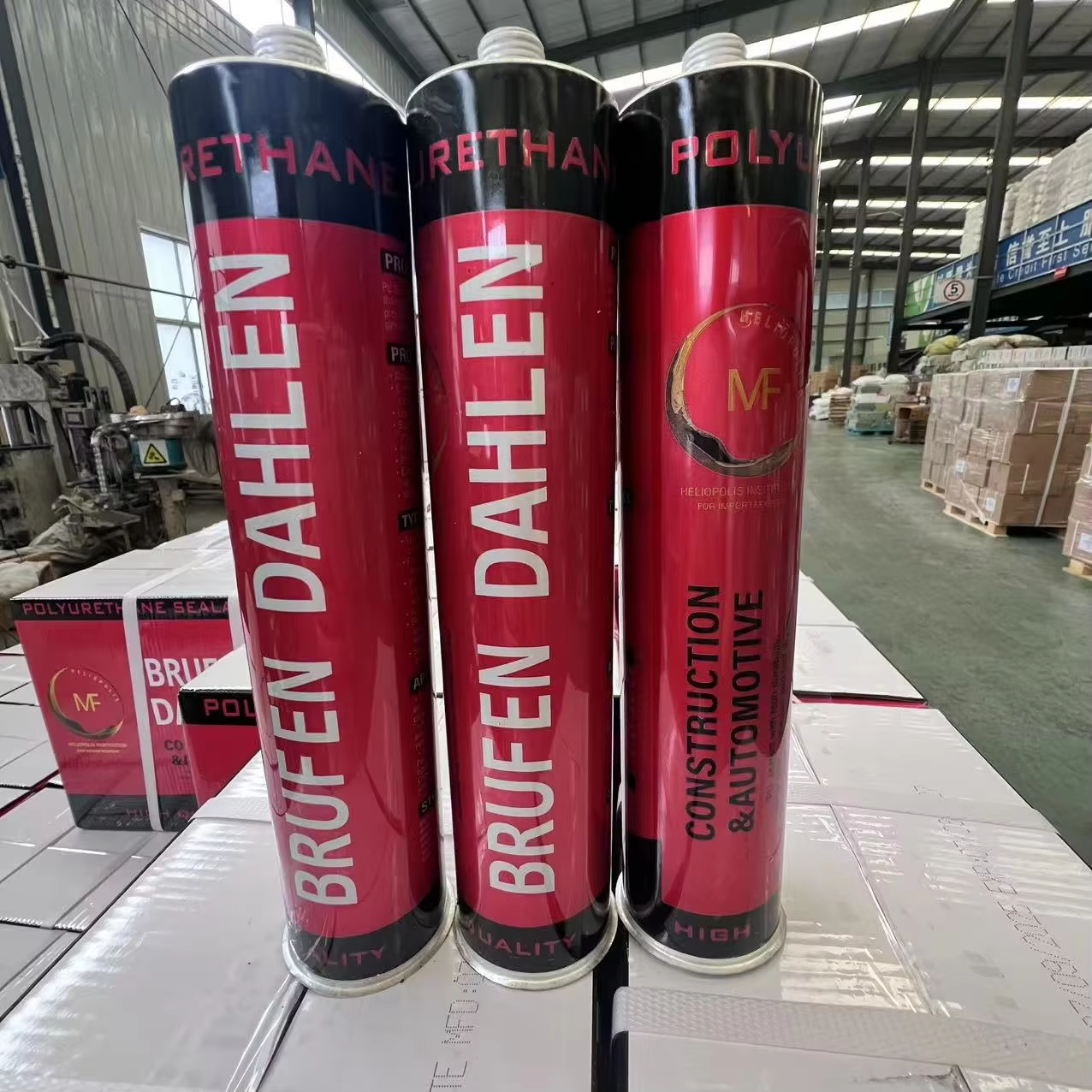
Construction work, whether on a large commercial site or a straightforward home renovation project, involves countless small but critical tasks that demand reliable bonding and sealing solutions. Among the many products available to builders, contractors, and maintenance professionals, general purpose silicone sealant stands out as one of the most versatile and dependable tools in any toolkit. Its ability to create durable, flexible, and waterproof seals across a wide range of surfaces has made it a staple in modern construction practice.
The real question many construction professionals and facility managers ask is not whether general purpose silicone sealant works, but how it actually simplifies the day-to-day complexity of building, repairing, and maintaining structures. From reducing the number of specialty products needed on-site to speeding up workflow and minimizing rework, this single product type delivers measurable efficiency gains across many common construction scenarios. Understanding how and where it delivers value is key to making smarter material decisions on every project.
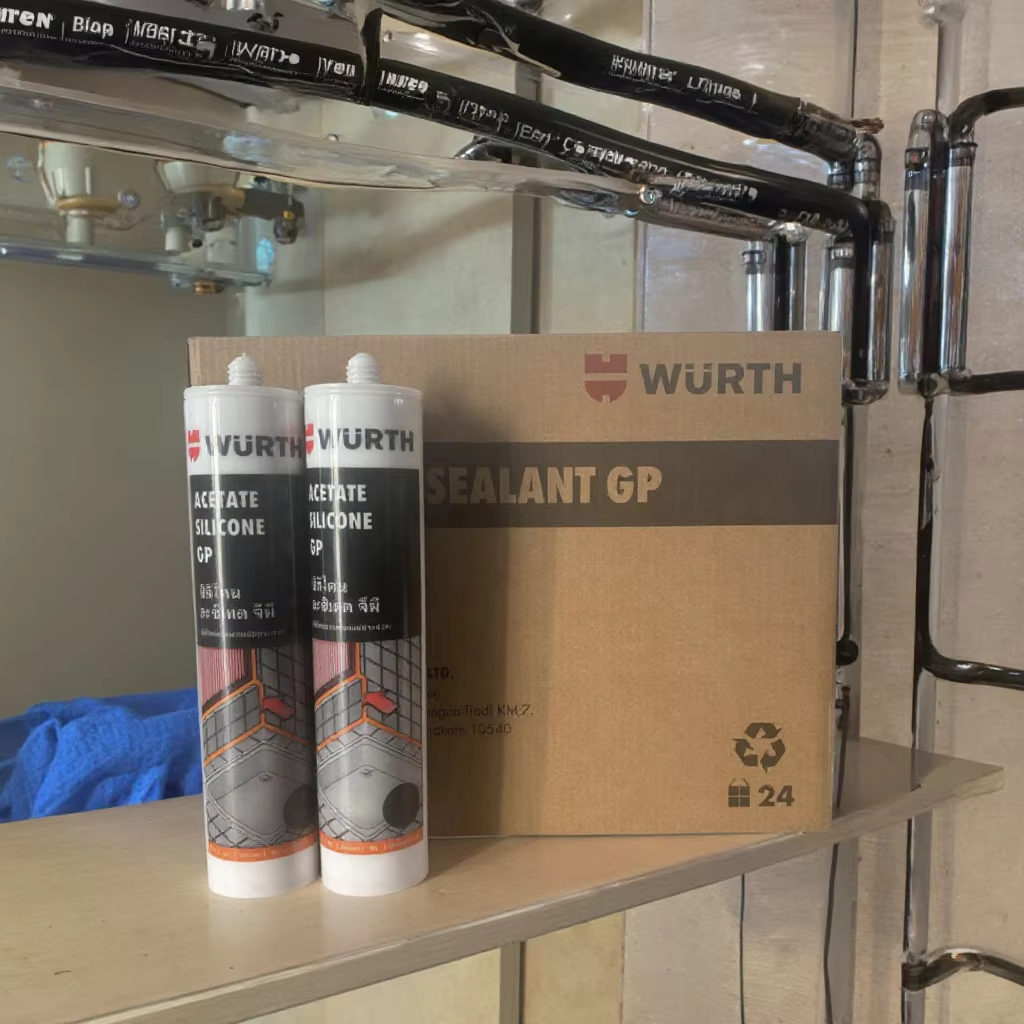
The Versatility That Reduces On-Site Product Complexity
One Product, Many Substrates
One of the most immediate ways general purpose silicone sealant simplifies construction work is by eliminating the need for multiple substrate-specific adhesive products. Traditional construction workflows often require separate sealants for glass, metal, ceramic, plastics, and masonry surfaces. A true general purpose silicone sealant bonds effectively across all of these materials, which means procurement teams can consolidate orders and site managers can reduce the number of product SKUs stored and tracked.
This versatility directly reduces the risk of using the wrong product on a given substrate, which is a surprisingly common source of rework and material waste on busy construction sites. When every team member knows that a single product is appropriate for most sealing tasks, decision-making speeds up and costly application errors become far less frequent. The consistency this brings to construction workflows is itself a significant efficiency gain.
From sealing expansion joints in facades to applying a clean bead around window frames or bathroom fixtures, general purpose silicone sealant handles diverse tasks without requiring technicians to switch between product types. This uniformity of approach translates directly into time saved and a simpler, more organized work environment.
Indoor and Outdoor Application Suitability
Construction work rarely stays confined to a single environment. A project might involve both interior finishing tasks and exterior weatherproofing work within the same day, often carried out by the same crew. general purpose silicone sealant is formulated to perform reliably in both indoor and outdoor settings, removing the need for teams to carry separate weather-resistant and interior-grade products.
Outdoors, it withstands UV exposure, temperature cycling, rain, and humidity without degrading or losing adhesion. Indoors, it provides clean, paintable or non-paintable finishes suitable for kitchens, bathrooms, and utility areas where moisture exposure is a consistent concern. This dual-environment capability is a practical asset that many construction teams do not fully appreciate until they calculate how much time they save by not switching products between tasks.
Sealing Efficiency Across Common Construction Tasks
Window and Door Frame Sealing
Window and door frame installation involves sealing the gap between the frame and the surrounding wall or structural opening. This is one of the most common applications for general purpose silicone sealant in both residential and light commercial construction. The material's flexibility allows the cured seal to accommodate the natural movement of frames caused by thermal expansion, building settlement, and humidity fluctuations without cracking or separating.
Because general purpose silicone sealant adheres to both porous masonry and smooth painted surfaces, installers do not need to prepare or prime most substrates before application. This reduces task preparation time considerably and allows work to move at a faster pace without sacrificing seal quality. The result is a weather-tight, long-lasting joint that does not demand frequent inspection or reapplication.
For project managers overseeing high-volume installation schedules, the ability to use one consistent product across all window and door sealing tasks also simplifies quality control. Inspectors and site supervisors can evaluate all sealed joints using the same performance benchmark, which makes defect identification and correction far more straightforward.
Plumbing and Sanitary Fixture Installation
Bathrooms, kitchens, and utility rooms require reliable waterproof seals around sinks, bathtubs, shower trays, and plumbing penetrations. General purpose silicone sealant creates a watertight bond in these environments that resists mold growth and maintains its seal integrity even under constant exposure to water and cleaning agents. This is critical not just for function but for building code compliance and long-term occupant satisfaction.
The application process is straightforward: clean the surfaces, apply a smooth, consistent bead of general purpose silicone sealant, tool the joint to the desired profile, and allow sufficient curing time before water exposure. The simplicity of this process means that even less experienced workers can achieve professional results with minimal training, which is particularly valuable in high-turnover labor environments common to many construction projects.
Because the same product used to seal window frames earlier in the construction sequence can be used for sanitary fixture installation later, the logistical simplicity compounds across the full project timeline. Fewer procurement decisions, fewer storage requirements, and fewer application protocols to remember all contribute to a smoother overall construction process.
Physical Properties That Support Construction Workflow
Flexibility and Movement Accommodation
Buildings are not static structures. They flex, settle, and expand with changes in temperature and load. Rigid sealants crack under these conditions, creating gaps that allow moisture infiltration, air leakage, and structural deterioration. General purpose silicone sealant maintains its elasticity after curing, which means it continues to perform as a seal even as the surrounding structure moves over time.
This elastic recovery property significantly reduces the frequency of maintenance interventions required to keep building envelopes and interior joints sealed. In practical terms, it means fewer callbacks, fewer warranty claims, and lower lifecycle maintenance costs for both contractors and building owners. A product that stays functional longer with less ongoing attention is inherently a simplifying product in a construction context.
The degree of flexibility offered by general purpose silicone sealant also makes it tolerant of minor application imperfections. Joints that are not perfectly uniform in width or that experience minor movement during the curing period are still likely to result in an effective seal, reducing the need for precise application conditions that other sealant chemistries may demand.
Temperature and Environmental Resistance
Construction projects happen in all climates and seasons. General purpose silicone sealant maintains performance across a broad temperature range, from sub-zero winter conditions to the intense heat of summer construction in tropical or desert environments. This thermal stability means that the product does not soften, flow, or become brittle with temperature change, which is a critical property for exterior applications and for any sealed joint exposed to direct sunlight.
Chemical resistance is another property that contributes to simplified maintenance workflows. General purpose silicone sealant resists degradation from mild cleaning chemicals, dilute acids, and alkalis commonly encountered in construction and building maintenance environments. This durability means that sealed joints remain intact through regular cleaning and maintenance cycles without requiring special protection or periodic resealing.
For contractors who need a product that performs without special handling, storage at moderate temperatures, or application within narrow environmental windows, the robust environmental tolerance of general purpose silicone sealant translates directly into simpler, more flexible site scheduling. Work can proceed under a wider range of conditions without risking seal failure.
Practical Application Considerations for Construction Teams
Surface Preparation and Application Best Practices
While general purpose silicone sealant is designed to minimize preparation requirements, basic surface preparation still plays a significant role in achieving optimal adhesion and seal longevity. Surfaces should be clean, dry, and free from dust, oil, and loose material before application. In practice, this means a quick wipe-down with an appropriate cleaning solvent is often sufficient, which adds only minutes to the preparation phase of any sealing task.
Application technique also matters. Applying a continuous bead at a consistent speed and angle, then tooling the joint smoothly before the sealant skins over, produces professional results and maximizes the contact area between the sealant and both substrates. Most experienced applicators develop this skill quickly, and with general purpose silicone sealant, the working time is typically generous enough to allow careful tooling without rushing.
Curing time is an important consideration in workflow planning. While general purpose silicone sealant skins over relatively quickly, full cure to the depth of the joint may take 24 hours or longer depending on joint width, temperature, and humidity. Scheduling subsequent construction activities to avoid disturbing freshly applied sealant is a basic but important workflow consideration that construction managers should incorporate into their task sequencing.
Storage, Handling, and Site Management Benefits
From a site management perspective, general purpose silicone sealant offers practical advantages in storage and handling. Standard cartridges are compact, stackable, and have a reasonable shelf life when stored properly. This makes them easy to manage in site storage facilities and reduces the risk of product waste from expired or damaged stock that might affect more specialized materials requiring strict storage conditions.
Application requires only a standard caulking gun, which is a tool already present on virtually every construction site. There are no special mixing ratios, no two-component systems to manage, and no heating or pressurization equipment required. This simplicity of tooling means that general purpose silicone sealant can be applied by any trained worker on-site, reducing dependence on specialized applicators and improving scheduling flexibility.
When projects involve multiple trades working in sequence, the ability to apply general purpose silicone sealant without specialized equipment or training means that sealing tasks can be assigned to the most available and appropriate crew at each stage, rather than waiting for a dedicated specialist. This flexibility is a genuine operational simplification that experienced project managers will recognize as valuable.
FAQ
What surfaces can general purpose silicone sealant bond to effectively?
General purpose silicone sealant adheres effectively to a broad range of construction surfaces including glass, aluminum, most plastics, painted surfaces, ceramic tiles, concrete, and masonry. This wide substrate compatibility is what makes it such a practical choice for construction teams working across multiple material types on a single project. Surface cleanliness and dryness are the primary requirements for achieving good adhesion.
How long does general purpose silicone sealant take to cure fully?
Most general purpose silicone sealant products form a surface skin within 30 to 60 minutes under normal temperature and humidity conditions. Full cure through the depth of the joint, however, typically requires 24 hours or more. Wider joints, cooler temperatures, and lower humidity levels can extend the curing period. Construction teams should plan task sequencing to avoid stressing or exposing sealed joints to water before full cure is achieved.
Can general purpose silicone sealant be painted over after application?
Standard general purpose silicone sealant is generally not paintable because paint does not adhere well to cured silicone surfaces. In situations where the sealed joint must be painted to match surrounding surfaces, a paintable acrylic-silicone hybrid sealant may be more appropriate. However, for most structural, sanitary, and weatherproofing applications where paint overage is not required, standard general purpose silicone sealant provides excellent performance without modification.
How should general purpose silicone sealant be stored on-site?
General purpose silicone sealant should be stored in a cool, dry location away from direct sunlight and extreme heat sources. Keeping cartridges sealed and capped when not in use prevents premature skinning. Under appropriate storage conditions, most products maintain their performance characteristics for 12 to 18 months from the manufacturing date. Rotating stock to use older cartridges first is a simple practice that prevents waste and ensures consistent application quality.