EN
EN



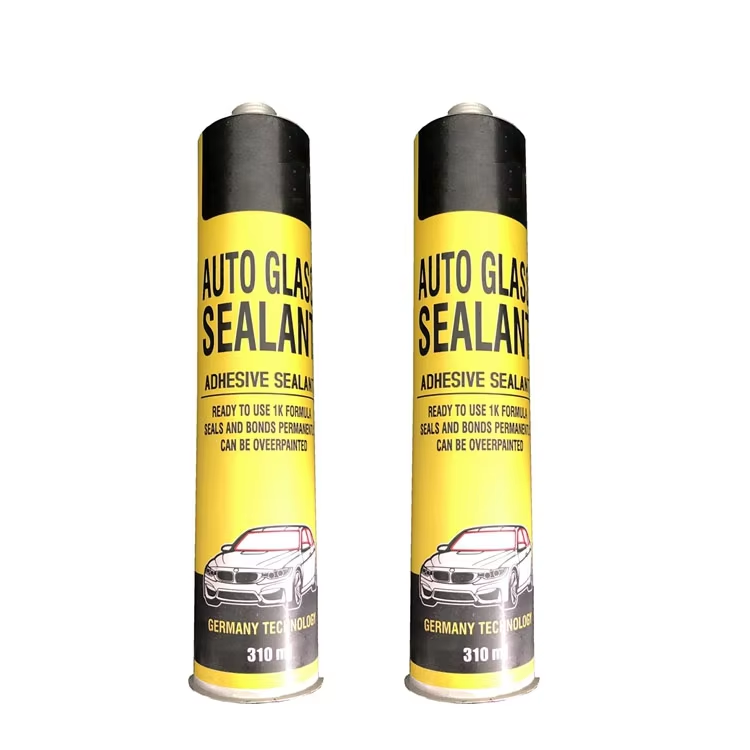
When selecting a sealant for demanding industrial, construction, or manufacturing applications, understanding the technical foundation of the product is essential. Wacker silicone sealant has become a reference-grade material across multiple industries due to its distinctive combination of thermal stability, chemical resistance, and long-term adhesion performance. Engineers, procurement specialists, and contractors who specify or source this type of product need to go beyond surface-level descriptions and examine the measurable, performance-defining characteristics that make it suitable for critical applications.
This article examines the key technical properties of Wacker silicone sealant in a structured and decision-useful way. Whether you are evaluating it for glazing, high-temperature sealing, electrical encapsulation, or general construction jointing, understanding these properties helps you determine fit, anticipate performance limits, and make informed sourcing decisions. The discussion covers thermal characteristics, mechanical behavior, adhesion capability, chemical resistance, and curing profile — the five pillars that define how this sealant performs across real-world conditions.
Thermal Performance and Temperature Resistance
Operating Temperature Range
One of the most widely cited technical properties of Wacker silicone sealant is its ability to maintain functional integrity across an exceptionally wide temperature range. Standard formulations of this sealant can withstand continuous exposure to temperatures up to approximately 200°C, while specialized high-temperature variants are engineered to perform under intermittent peak conditions reaching 300°C or higher. This makes the material especially valuable in industrial sealing scenarios where thermal cycling is a constant stressor.
At the lower end of the temperature scale, Wacker silicone sealant retains flexibility even at sub-zero temperatures, often performing reliably down to -40°C or lower depending on formulation. This cold-temperature flexibility is a direct consequence of the silicone polymer backbone, which does not undergo the same glass transition stiffening behavior observed in organic sealants. For applications in refrigeration systems, cold-storage construction, or outdoor environments in harsh climates, this low-temperature flexibility is a critical specification advantage.
Thermal Cycling Stability
Beyond absolute temperature limits, Wacker silicone sealant demonstrates strong resistance to the fatigue effects of repeated thermal cycling. When materials are repeatedly heated and cooled, many sealants experience micro-cracking, delamination, or progressive loss of adhesion at the bond interface. The silicone-based chemistry of this sealant provides sufficient elastomeric recovery to accommodate the dimensional changes induced by thermal expansion and contraction without bond failure.
This thermal cycling stability is particularly relevant in applications such as automotive engine bay sealing, industrial oven door gaskets, HVAC duct joints, and curtain wall glazing systems. In each of these contexts, the sealant is not just subjected to heat — it must survive repeated transitions between extremes while maintaining its sealing function. The combination of high elongation at break and strong cohesive integrity enables Wacker silicone sealant to absorb these mechanical stresses without permanent deformation.
Mechanical Properties and Elastomeric Behavior
Elongation, Tensile Strength, and Shore Hardness
The mechanical profile of Wacker silicone sealant is defined by a balance between flexibility and structural integrity. Elongation at break values for typical formulations range from 150% to over 400%, depending on whether the product is positioned as a structural glazing sealant, a general-purpose joint sealant, or a high-movement sealant. This high elongation capacity means the cured sealant can accommodate significant substrate movement without tearing or disbonding.
Tensile strength values for cured Wacker silicone sealant typically fall in the range of 0.6 to 2.0 MPa, which reflects the material's prioritization of elastic deformation over rigid load-bearing. Shore A hardness values are generally in the range of 15 to 40, indicating a soft to medium-soft cured material. This shore hardness range ensures the sealant remains compliant enough to absorb differential movement between substrates while providing enough body to maintain joint geometry under light mechanical load.
Elastic Recovery and Fatigue Resistance
Elastic recovery is a critical parameter that distinguishes silicone-based sealants from their polyurethane or acrylic counterparts. When a sealant joint is cyclically loaded — as happens in a building facade responding to wind pressure or thermal expansion — the sealant must return to its original geometry after each deformation cycle. Wacker silicone sealant exhibits elastic recovery rates typically above 90%, meaning that after deformation, the cured material returns to over 90% of its original shape without permanent set.
This high elastic recovery is what gives Wacker silicone sealant its long-term fatigue resistance. Over thousands of load-unload cycles, materials with poor elastic recovery progressively develop residual deformation and eventually crack or lose adhesion. The silicone polymer network resists this type of fatigue degradation, which is one of the primary reasons it is preferred in structural and semi-structural glazing applications where service life expectations span decades rather than years.
Adhesion Characteristics and Substrate Compatibility
Adhesion to Common Substrates
Wacker silicone sealant demonstrates strong adhesion to a broad range of substrates including glass, aluminum, anodized aluminum, powder-coated steel, concrete, natural stone, ceramic, and many engineering plastics. The adhesion mechanism is primarily physico-chemical in nature, involving both van der Waals interactions and, in the case of acetoxy or oxime-curing formulations, covalent siloxane bonds formed at the substrate interface during cure. This dual mechanism contributes to the durable adhesion observed on mineral and metallic substrates.
For certain substrates — particularly low-energy surfaces such as polyolefin plastics, PTFE, or highly contaminated metals — adhesion promoters or surface primers may be required to achieve the target bond strength. This is a standard consideration in professional sealant specification, and it does not represent a limitation unique to Wacker silicone sealant but rather a universal characteristic of silicone chemistry. When primers are used correctly, adhesion performance on challenging substrates is significantly enhanced and long-term bond durability is reliably achieved.
Movement Capability in Joints
Movement capability is expressed as the percentage of joint width that the sealant can accommodate in extension or compression without bond failure. High-performance Wacker silicone sealant formulations offer movement capability ratings of ±25% or higher, which means a 20mm joint can safely accommodate 5mm of movement in either direction. This rating is critical in façade engineering, where thermal expansion of aluminum cladding panels and differential settlement of structural frames generates significant joint movement over the life of a building.
When specifying Wacker silicone sealant for a joint, engineers must account for both the maximum joint width and the expected movement amplitude. Underestimating the movement capacity required leads to cohesive or adhesive failure at the joint, while oversizing the sealant is wasteful and can introduce unnecessary flexibility. Proper joint design, combined with the movement capability data provided in the technical data sheet, ensures that the sealant performs its sealing function for the designed service life of the assembly.
Chemical Resistance and Weatherability
Resistance to UV, Ozone, and Moisture
The silicone polymer backbone in Wacker silicone sealant is inherently resistant to ultraviolet radiation, ozone, and atmospheric moisture. Unlike organic polymer sealants — which rely on carbon-carbon backbone bonds that are susceptible to UV-driven chain scission — the silicon-oxygen backbone of silicone sealants is photochemically inert under normal solar irradiance. This means that prolonged outdoor exposure does not cause the surface chalking, hardening, cracking, or color fading commonly seen in polyurethane or acrylic sealants after several years of weathering.
For outdoor glazing, roofing, curtain walls, and transportation infrastructure applications, the weatherability of Wacker silicone sealant translates directly into extended maintenance cycles and lower total cost of ownership. The sealant maintains its color — typically transparent or white in standard formulations — and its elastic properties through extensive accelerated weathering testing equivalent to 10 or more years of outdoor exposure. This weathering resistance is among the most practically significant technical properties from a long-term building maintenance perspective.
Chemical Resistance to Industrial Agents
Wacker silicone sealant exhibits good resistance to a wide range of industrial chemicals including dilute acids, dilute alkalis, saltwater, mineral oils, and many cleaning agents used in commercial and industrial environments. This chemical resistance profile makes it suitable for food processing facilities, pharmaceutical manufacturing environments, marine applications, and chemical plant sealing tasks where occasional contact with process fluids is unavoidable.
It is important to note that Wacker silicone sealant is not universally resistant to all chemical agents. Concentrated organic solvents, concentrated strong acids, and certain hydrofluoric acid compounds can attack the silicone matrix over extended contact time. This is why technical data sheets always specify resistance ratings for specific chemical concentrations and contact durations rather than issuing blanket chemical resistance claims. Engineers specifying the sealant for chemically aggressive environments should always verify compatibility against the most current resistance tables published in the technical documentation.
Curing Profile and Application Properties
Cure Mechanism and Skinning Time
The curing mechanism of Wacker silicone sealant is moisture-initiated, meaning that atmospheric humidity triggers the cross-linking reaction that converts the paste-like uncured sealant into a solid elastomeric mass. Depending on the specific chemistry — acetoxy cure, oxime cure, or alkoxy cure — the surface skinning time varies from as little as 5–10 minutes for fast-skinning formulations to 20–30 minutes for slower-curing variants designed to allow tool-finishing operations over a longer open time.
The through-cure rate of Wacker silicone sealant is primarily governed by humidity levels and joint depth. Under standard conditions of 23°C and 50% relative humidity, typical sealant joints cure from the outside inward at approximately 2–3mm per 24 hours. This means a 6mm deep joint would require approximately 48–72 hours to achieve full through-cure. In low-humidity environments, the cure rate slows, and applicators should account for this in project scheduling, particularly when joint substrates will be subjected to early mechanical loading or water exposure.
Workability and Application Temperature Range
In its uncured state, Wacker silicone sealant is formulated to provide good workability across a practical application temperature range of approximately 5°C to 40°C. Within this range, the sealant exhibits the correct flow and self-leveling characteristics needed for clean joint filling and effective tooling with a spatula or finishing tool. At temperatures below 5°C, the uncured sealant becomes increasingly viscous, making application more difficult and potentially trapping air pockets in the joint.
Viscosity grades of Wacker silicone sealant are available to suit different application methods and joint orientations. Lower viscosity formulations are preferred for horizontal joints and situations requiring self-leveling behavior, while higher viscosity non-sag formulations are specified for vertical joint applications where the uncured sealant must hold its position without slumping before skinning begins. Selecting the correct viscosity grade is part of complete sealant specification and directly affects application quality and final joint aesthetics.
FAQ
What temperature range can Wacker silicone sealant withstand?
Standard formulations of Wacker silicone sealant are rated for continuous use up to approximately 200°C and can maintain flexibility at temperatures as low as -40°C. High-temperature specialty grades may tolerate intermittent exposure to temperatures of 300°C or above. The exact rating depends on the specific product formulation and should be confirmed in the technical data sheet.
Is Wacker silicone sealant suitable for outdoor and UV-exposed applications?
Yes. Wacker silicone sealant has excellent UV resistance because its silicon-oxygen polymer backbone is photochemically stable under normal solar radiation. Unlike organic sealants, it does not chalk, harden, or crack under prolonged outdoor weathering, making it a preferred choice for curtain walls, glazing systems, and roofing applications with long service life requirements.
How long does Wacker silicone sealant take to fully cure?
The through-cure rate depends on joint depth, ambient temperature, and relative humidity. Under standard conditions of 23°C and 50% relative humidity, the sealant cures at approximately 2–3mm per 24 hours from the exposed surface inward. A 6mm deep joint would typically reach full through-cure in 48–72 hours. Low humidity or cold temperatures slow the cure rate significantly.
Does Wacker silicone sealant adhere to all substrates without a primer?
Wacker silicone sealant bonds well to most common substrates including glass, aluminum, concrete, steel, and ceramics without requiring a primer under normal conditions. However, for low-energy surfaces such as polyolefins or heavily contaminated substrates, an appropriate adhesion primer is recommended to achieve reliable long-term bond performance. Always consult the technical data sheet and primer compatibility guide for the specific substrate in question.